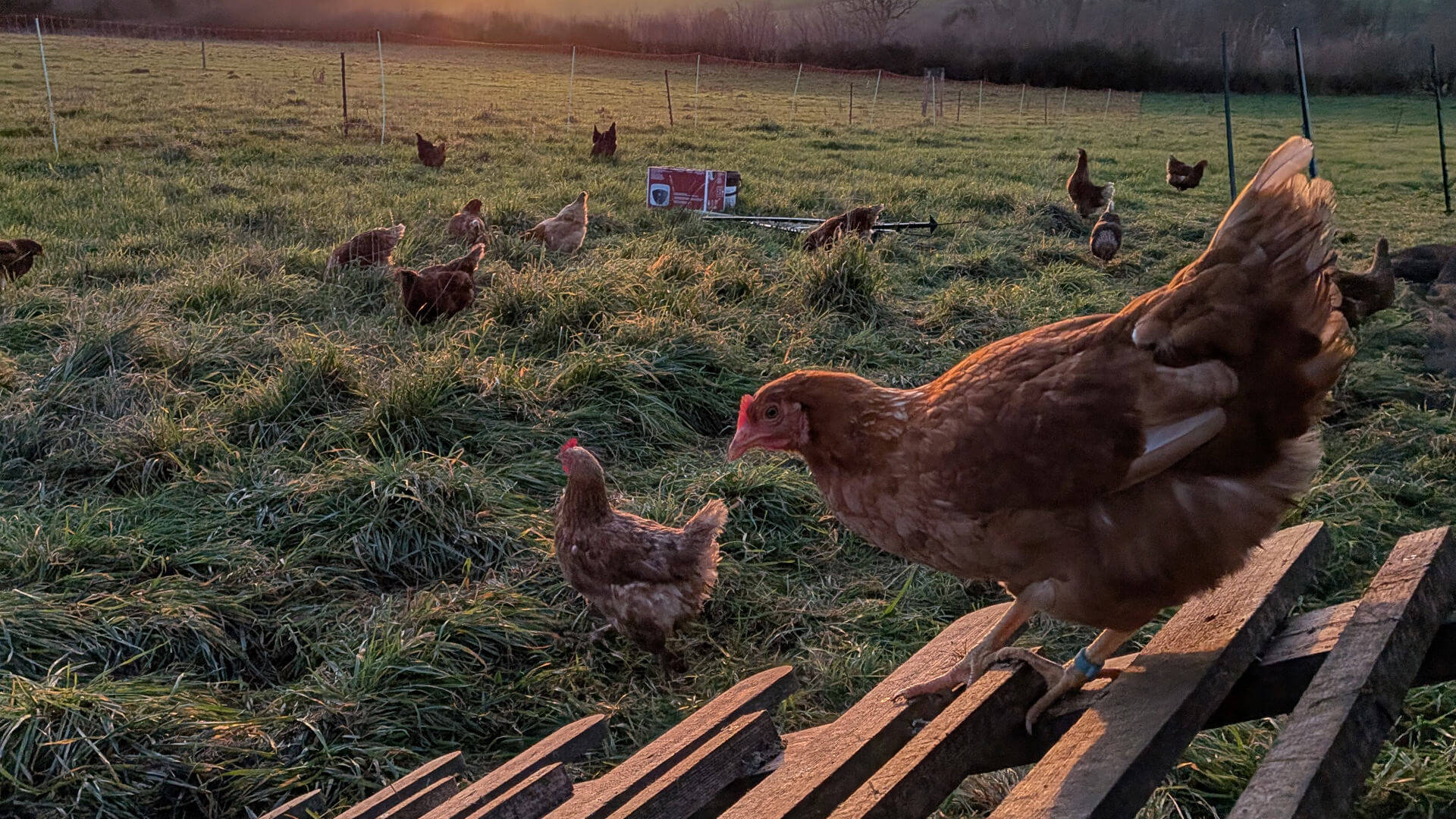
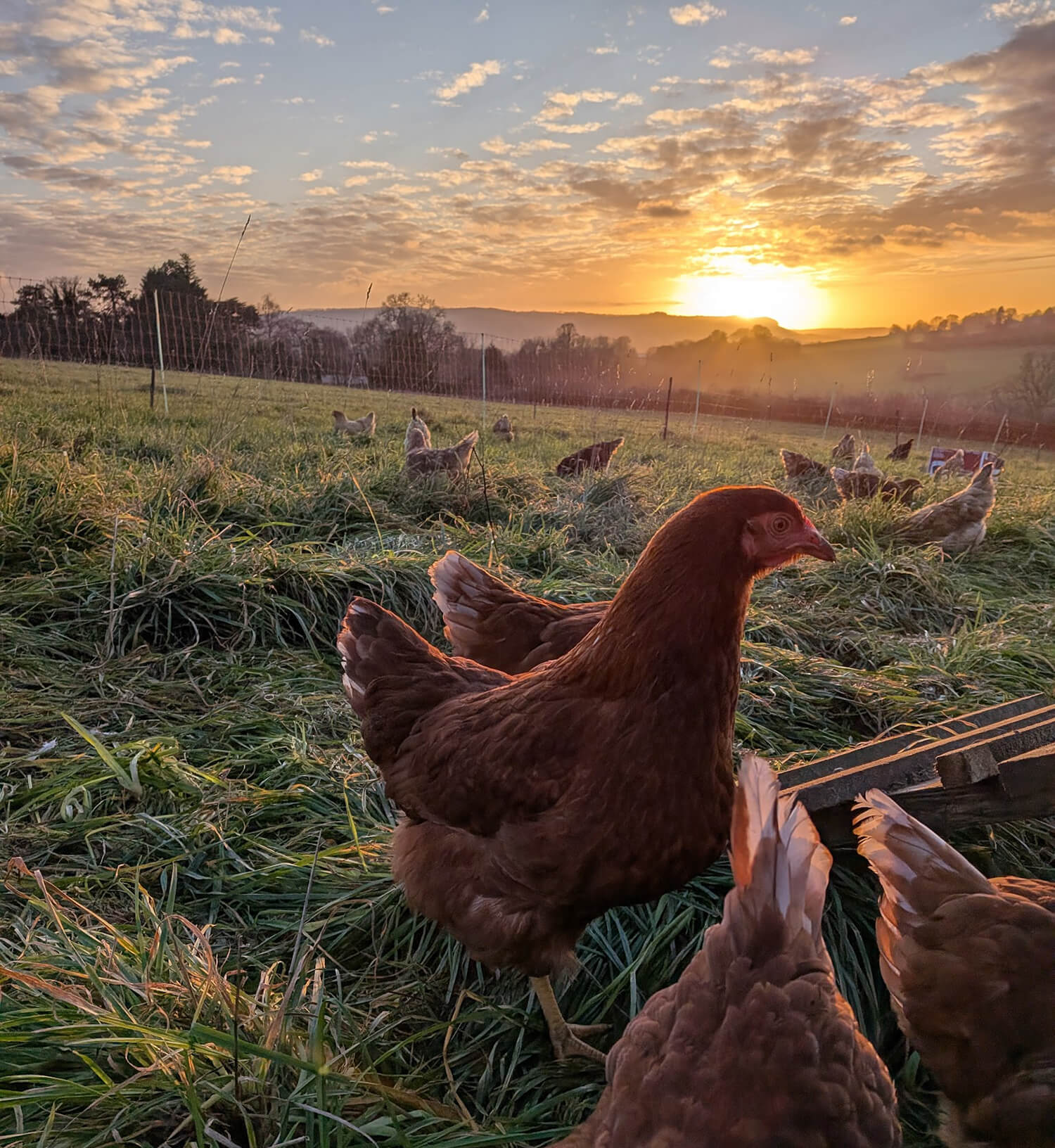
What a lovely time of year, spring is my favourite season and surely it is for the cows and the chickens too! April has seen the livestock all transition back to grass: from hay, woodchip and shavings for the cattle, hens and chicks respectively. What a relief!
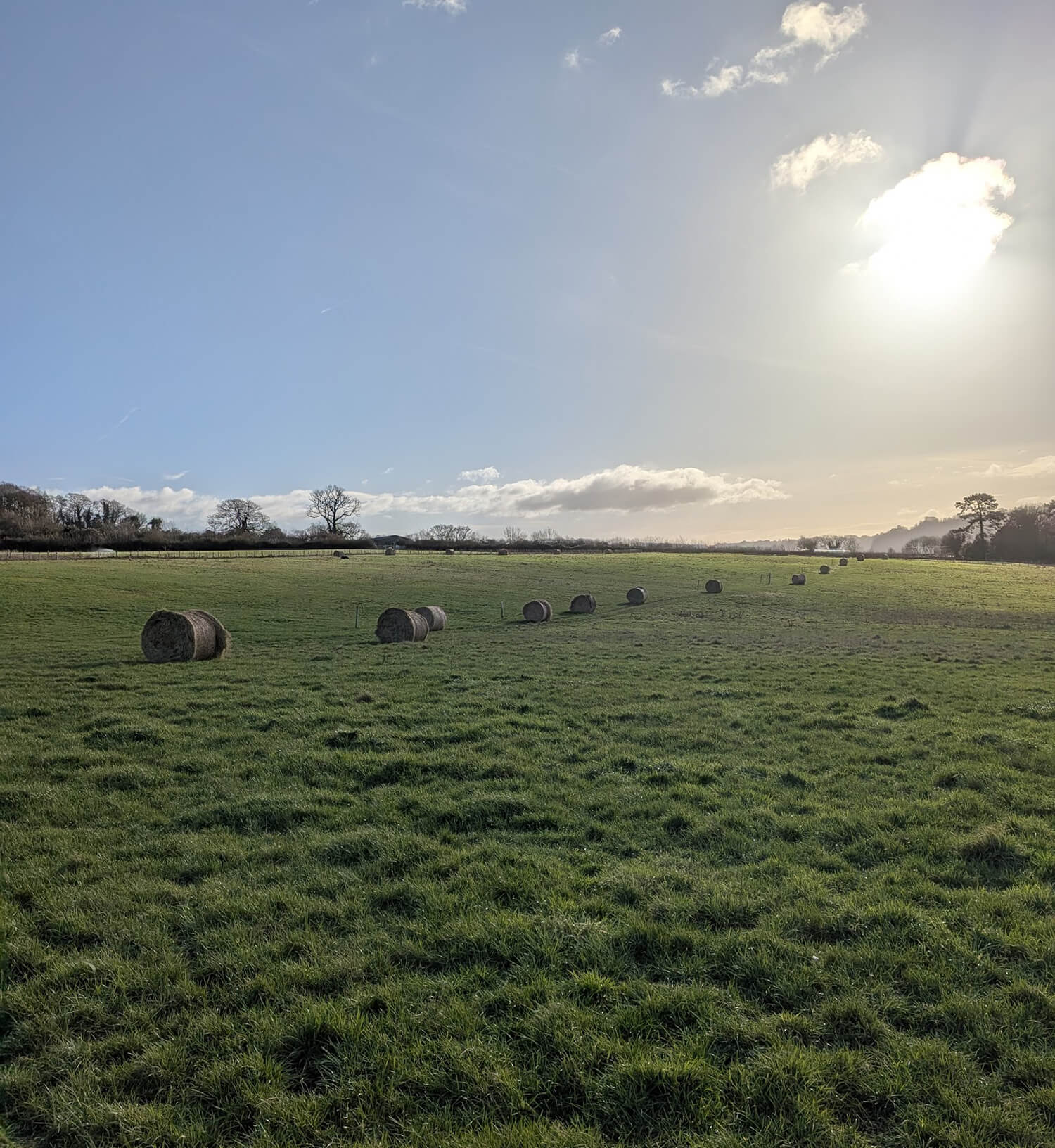
‘Bale grazing’ is the term used to describe the method of feeding hay to the cattle which we employ through winter. Each day a bale of hay is rolled out onto a fresh patch of grass where the cattle graze for that day. This type of grazing slows the mob down in its rotation around the farm; allowing adequate recovery for the pasture. Now the warmer weather has returned, we have some good grass in front of us and the mob is once again flying round the farm on a 100% foraged diet – yum!
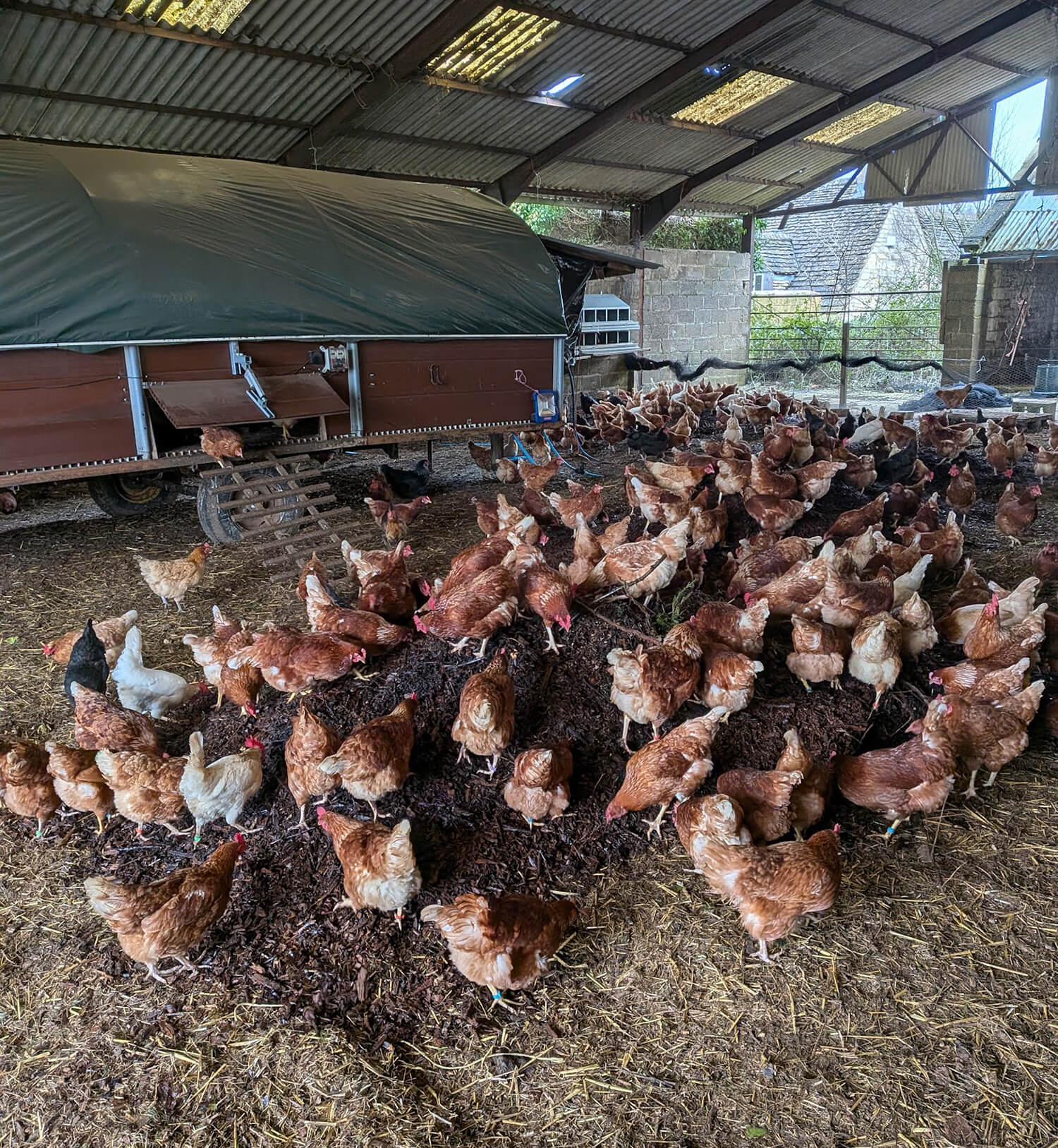
Our laying hens had been scratching around woodchip in the barn for far too long, until on April 9th the Avian Influenza (AI) lockdown measures were lifted. Back in November, the risk of AI was deemed too high by the Animal and Plant Health Agency, which meant that flocks across the country had to be kept away from any wild birds and were locked indoors. We have done our best to provide a clean litter for them to scratch in as well as lots of leafy green bits to peck through; waste from the market garden – big thanks to Athene and Max! Now back out on the pasture, the hens are showing all their natural behaviours again: dust bathing, pruning, basking in the sun, scratching and foraging. All just in time for our third hen house to be added to the convoy!
The first batch of broilers (meat chickens) arrived back in March and have been keeping cosy in the brooder space under heat lamps. At just over three weeks old the chicks have enough feathers to go out onto grass without the need for extra heating. At first the chicks are quite wary of the shiny, green stems all around them but they soon learn that this is food too! When the pens are moved on, twice a day, a nice patch of heavily impacted and fertilised pasture is left behind. With the right rest period, these lanes will bounce back vigorously both above and below ground increasing the resilience of one of our poorer fields. Thank you chickens!
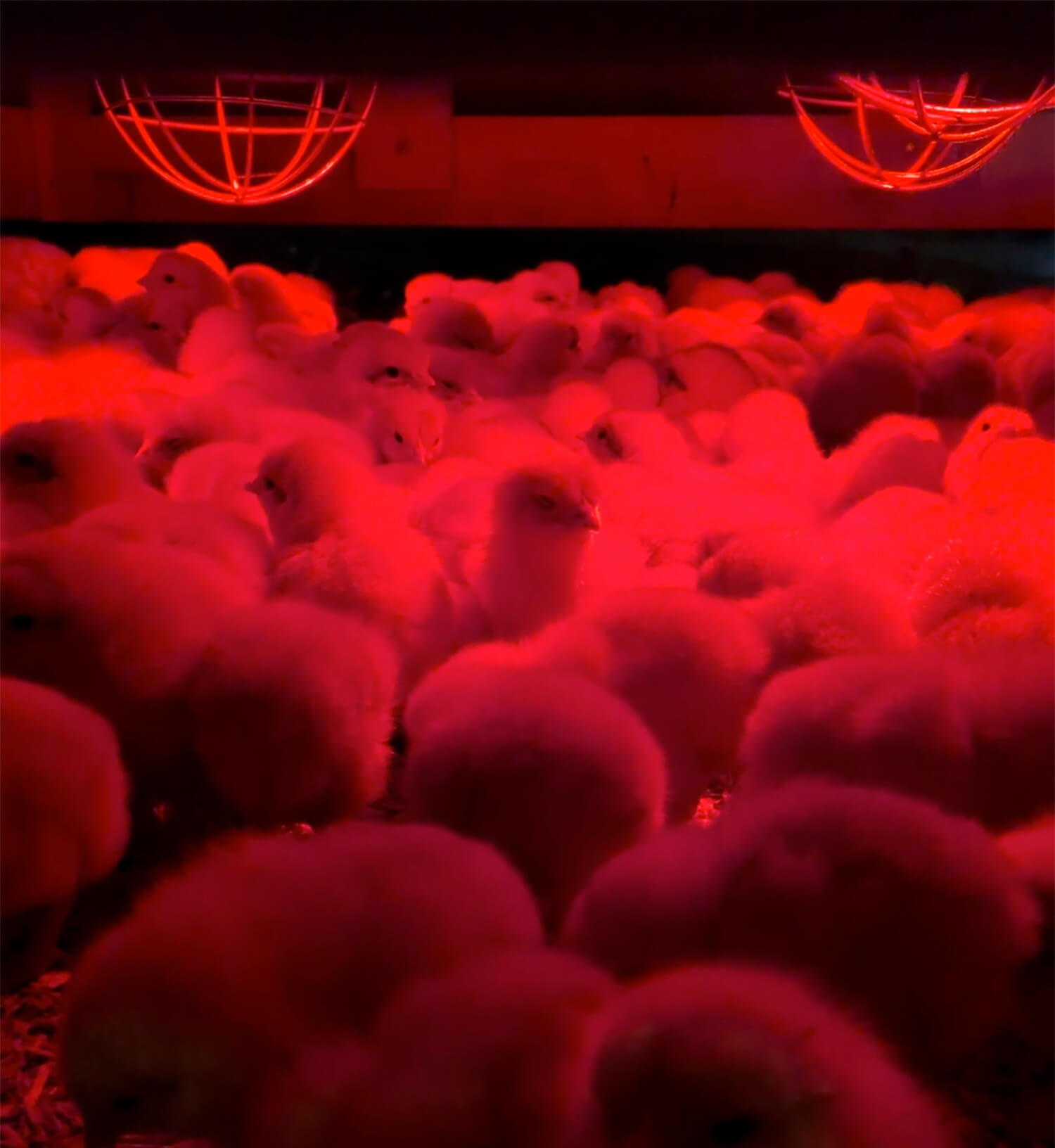
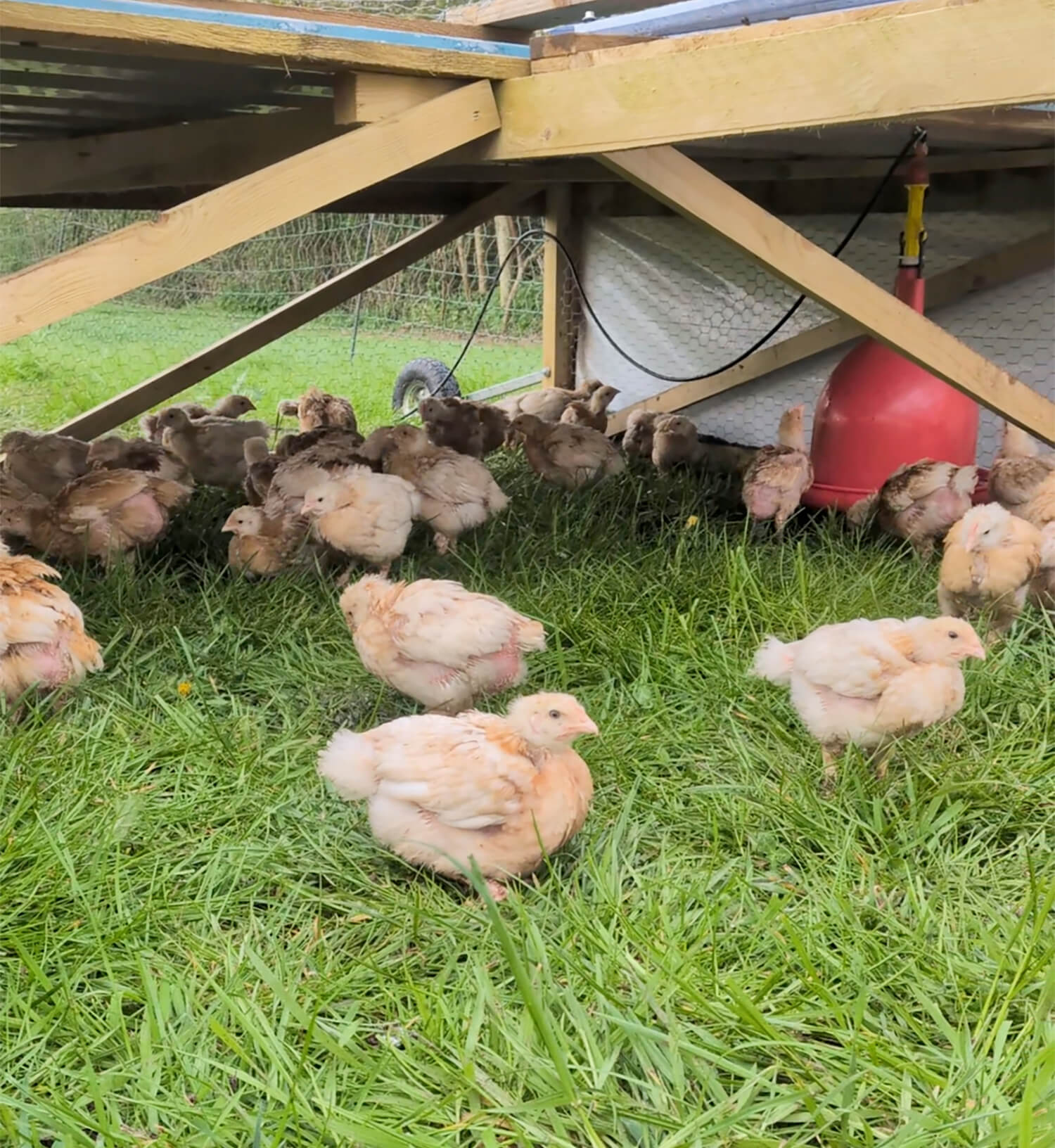
Now the second batch of 450 chicks have arrived, we have 180 more layers arriving in May and then we will start calving. That’s a lot of lives to look after and some busy and fun times ahead. Come and see them all in action at our open day on the 14th of June.
Matt Dowen
