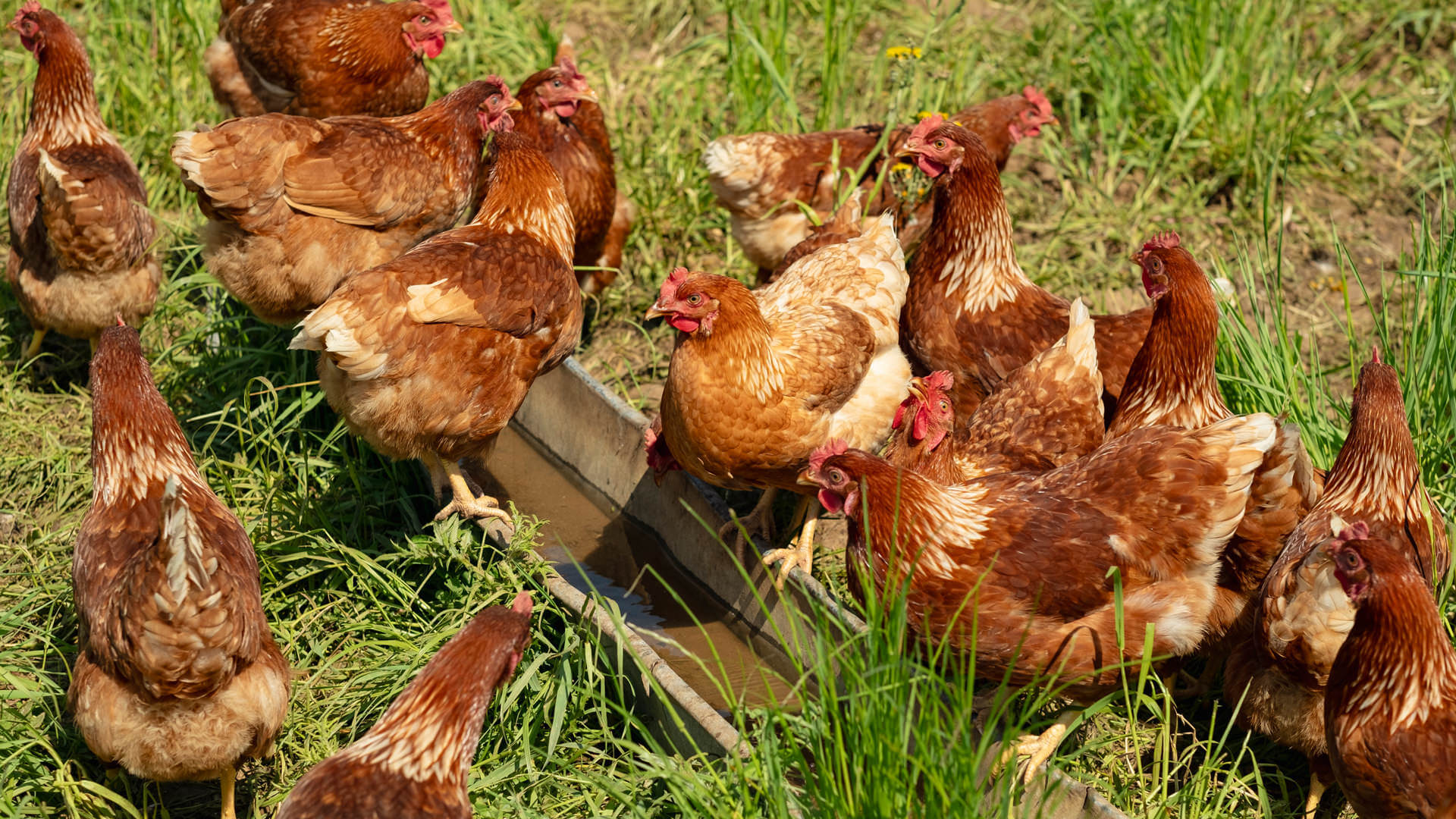
With winter solstice around the corner, the days are shortening and the hens are slowing down for a well deserved rest – it has been an eventful year!
Back in April we introduced a second laying flock; a bigger ‘chook wagon’ with 180 new hens of four different breeds. They ran side by side for a month until we removed the dividing net and they became one, happy integrated flock.
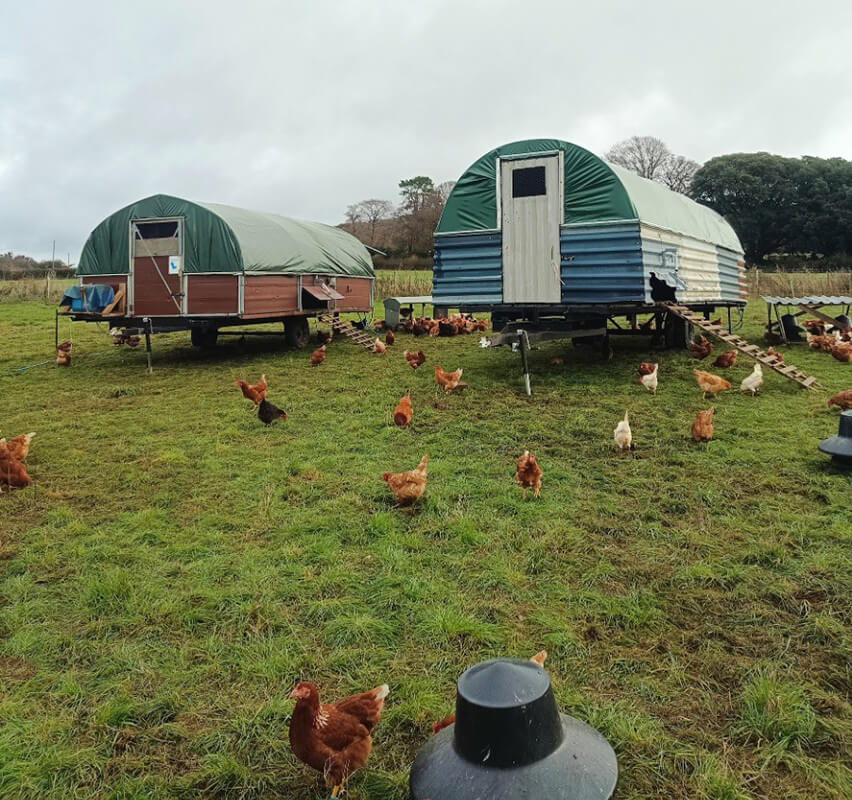
Chook Wagons
We were soon flooded with eggs and thanks to some good sales moves happy homes were found for them all – over 2000 eggs per week in the height of the season.
Unfortunately, the egg production then took a hit when a fox decided to pay us a visit. Quite devastating but an effective reminder; the electric fence must stay hot.
Months of hot, dry weather ensued; the birds enjoyed basking in the sun, making dust baths and having a good groom. However the drought soon led to dry, lignified grass in the pasture and all the yolks became pale. The colour of a yolk is affected by the carotenoids in the hens’ diet; fresh, green grass contains them which in turns the yolk a deep, yellowy orange. Of course, large scale commercial systems used synthetic additives to alter the colour which is obviously not a reflection of a hen reared outside with access to diverse forage! End of rant…
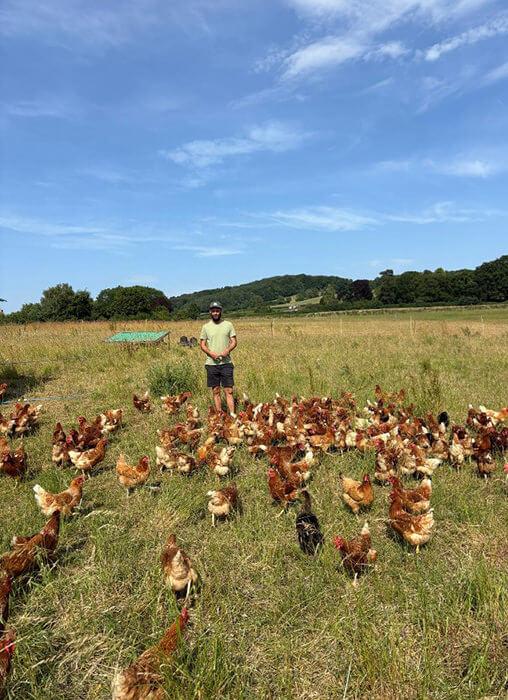
Hens with very little green grass already by mid-June!
At the end of July, after weeks of prolonged heat, the egg production dropped off a cliff – 80 eggs/day from over 300 hens and some disgruntled customers. A hen’s ability to regularly produce an egg is affected by a few things, and one of the main drivers is protein intake. I think that the intense heat led to a reduction in their feed consumption; less feed, less protein, fewer eggs. To increase their intake we installed drinkers outside (not just in) the houses and started to scatter some feed around the run. Hens like an activity or stimulant (they are very inquisitive by nature) so scattered feed was fun to search for and eat.
Through September and October the lay rate returned to where it should be, the rain brought green grass and orange yolks were restored. We said goodbye to the old hens (nearly 2 years old) who were rehomed with a charity as their eggs were less regular, thin-shelled and misshapen. 120 Lohmann Browns have recently been introduced to the flock and everyone seems to have found their place in the pecking order.
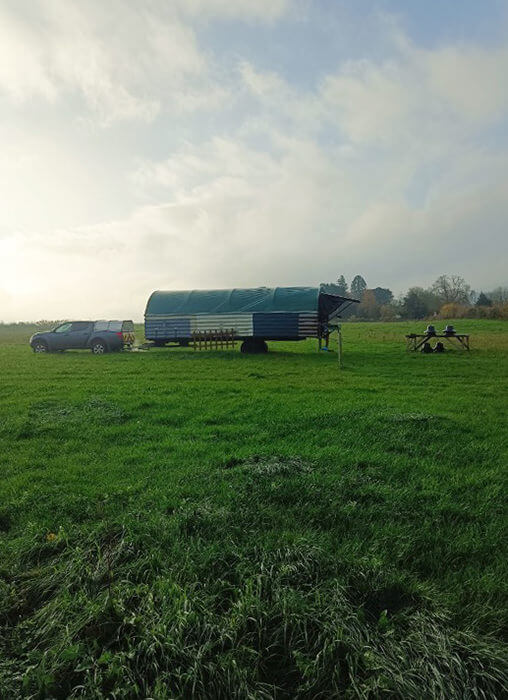
Hen house on the move
Deliciously nutritious eggs aside, I am excited about the layers’ impact on the pasture, or more precisely their nitrogen rich poop! We move the houses twice a week and give a good rest period before the next pass – about three months this season. The layers are out in one of our poorest fields formerly used for arable cropping, where the topsoil is shallow and fertility and life in the soil is low. Now the grass is now growing back with a deep, green colour, with thicker stems and more prolific growth.
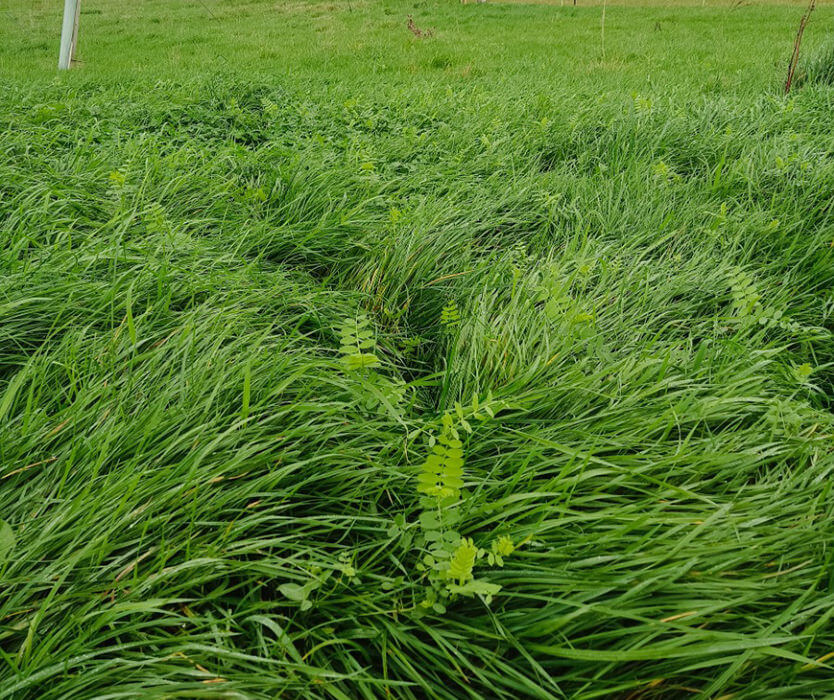
Luscious regrowth where hen house was
The layer enterprise offers many advantages to the farm – delicious eggs, beneficial impacts on the pasture and good revenue for the livestock operation. That’s why for 2026 we are planning a third hen house!
Matt Dowen
