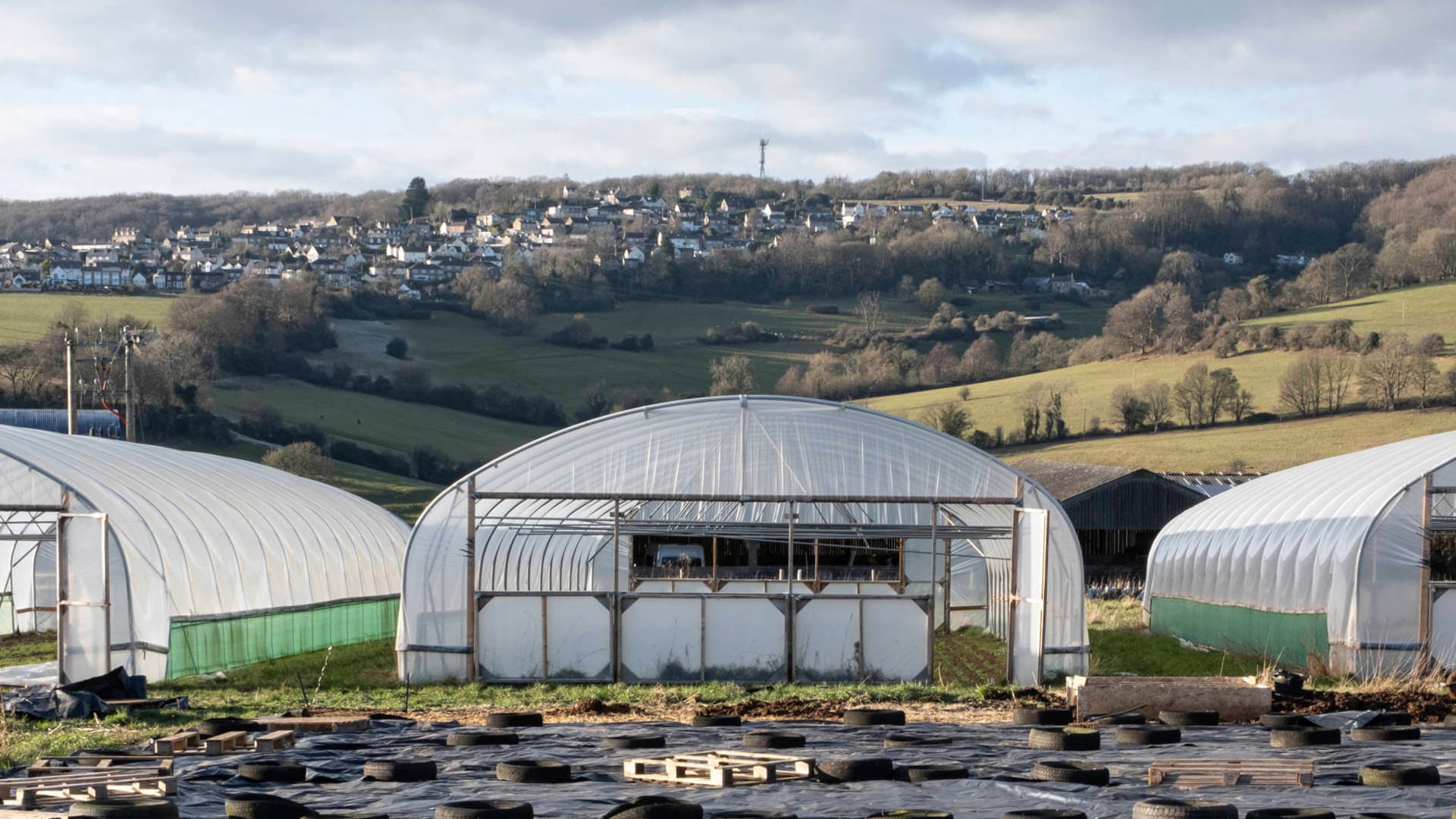
It’s been a busy month here on the farm as we try to get through our long list of pre-season maintenance, upgrades and admin. Winter is usually a quieter time in farming, but it’s equally always a shock just how short-lived that break is, with the first signs of spring already trying to push through. The wild garlic is starting to emerge in the woods that run along the stream at the bottom of the farm, which for me is always one of those key points of the year and a real signifier that Spring is starting to rear its head.
I’ve been settling into my role as farm manager, spending lots of time getting to know the team and the land, as well as gradually taking on more of the tasks associated with running the farm. Eric is simultaneously stepping back to be the farm’s director; it’s a complicated and delicate process for the whole team, but an important step in the farm’s development. It’s been a great experience for me so far, learning bucket loads from the team and their various expertise.
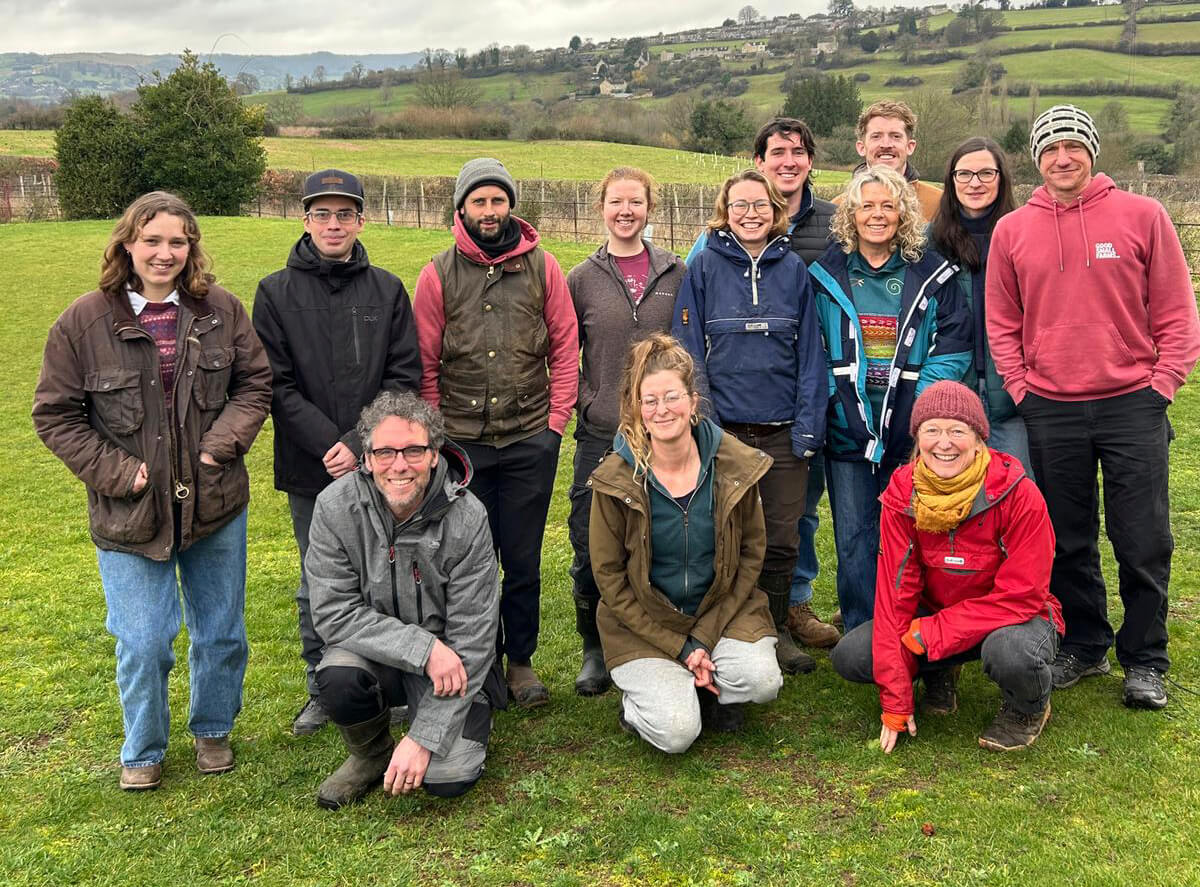
At the beginning of the month we had our annual meeting with the whole team. This is an opportunity for everyone to discuss the season that’s ended and look forward to the year ahead, reflecting on what went well and where we hope to improve. It was also an opportunity for me to show off some cooking skills from my previous career as a chef and cook everyone a big shared lunch using the farm’s produce.
Rain and the pond
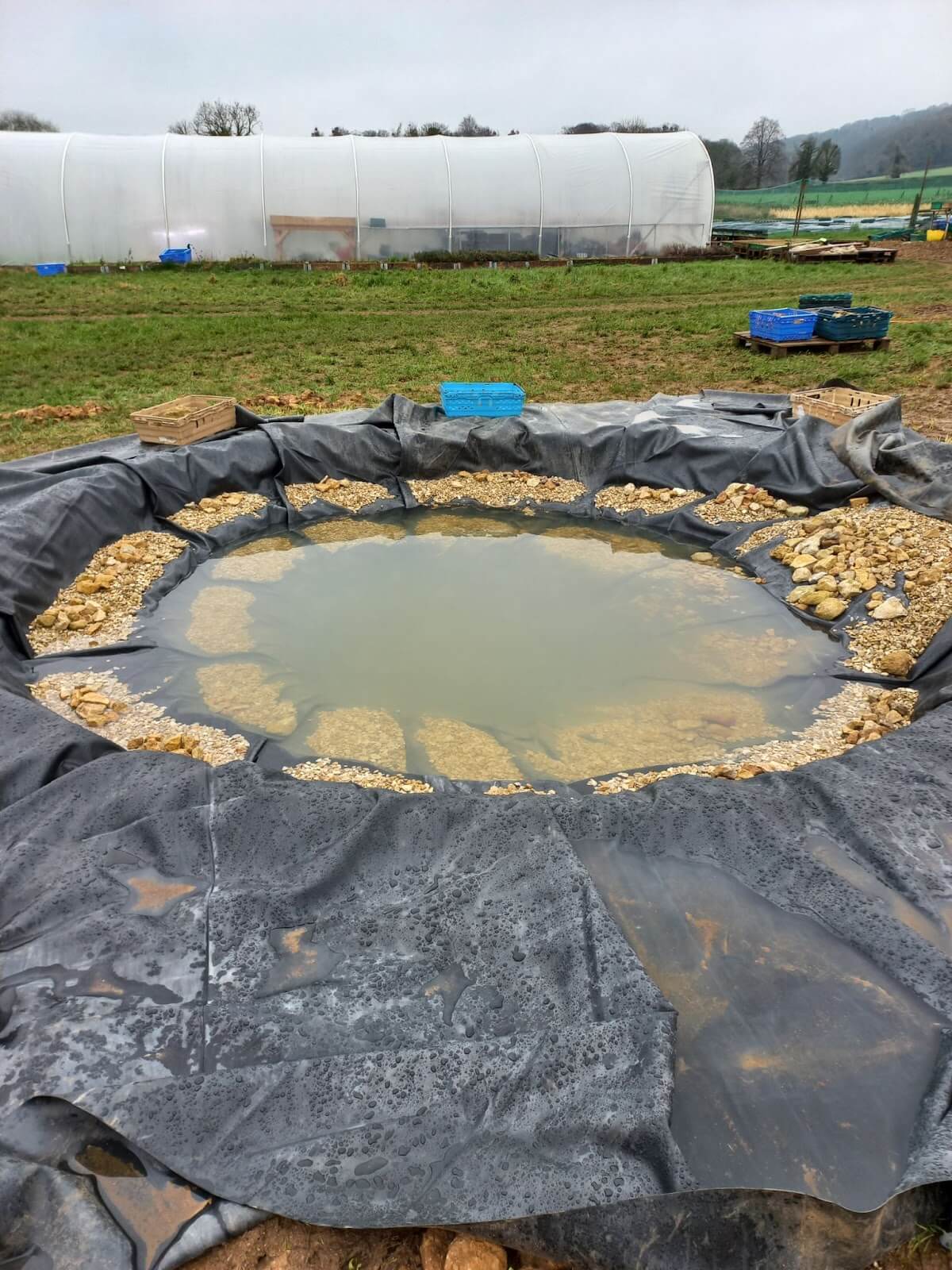
February has been completely dominated by the rain this year. This time of year it has less of an effect on the success or failure of our crops than during the growing season, because the market garden is largely empty, the trees are resting and the pasture is carefully managed with mob grazing to minimise the potential damage caused by the wet. We’re also lucky, for a farm next to a sizable stream, to be on a hill. It means that while we still have very soggy fields, even for this time of year, we are at least not completely flooded, like many fields currently are up and down the country. The rain is also playing into the hands of the market garden team, who managed to get their new wildlife pond dug and lined before the big wave of rain began in earnest, and it’s since filled up very nicely!
RAU Visit
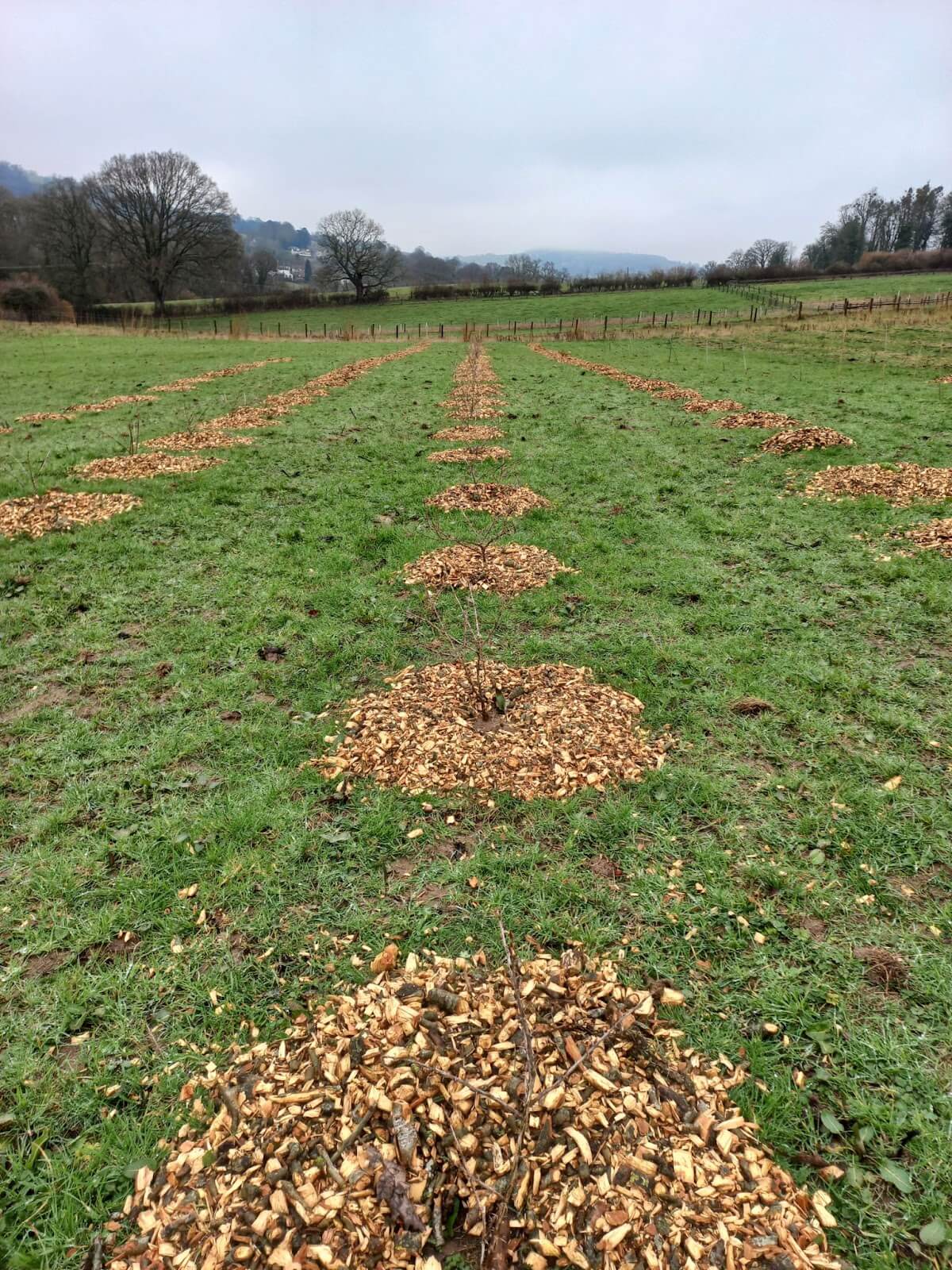
We had the first of three visits from MSc Agroecology students from the Royal Agricultural University last week, who very enthusiastically helped woodchip some recently planted gooseberry bushes in our berry orchard. They worked at breakneck speed and got a useful job done in half the time it would’ve taken our tree nursery team alone. Next week they will be getting hands on with our livestock with Matt, who will show them our mob grazing system, egg collection process and rope them into some fencing work. On their final visit they’ll dig into the details of the farm’s economics, vision and strategy with Eric, giving them a chance to cement everything they’ve observed into the broader picture. Visits like this are extremely valuable for farms and students alike, providing an important intersection between the classroom and the working world.
Andy’s project list
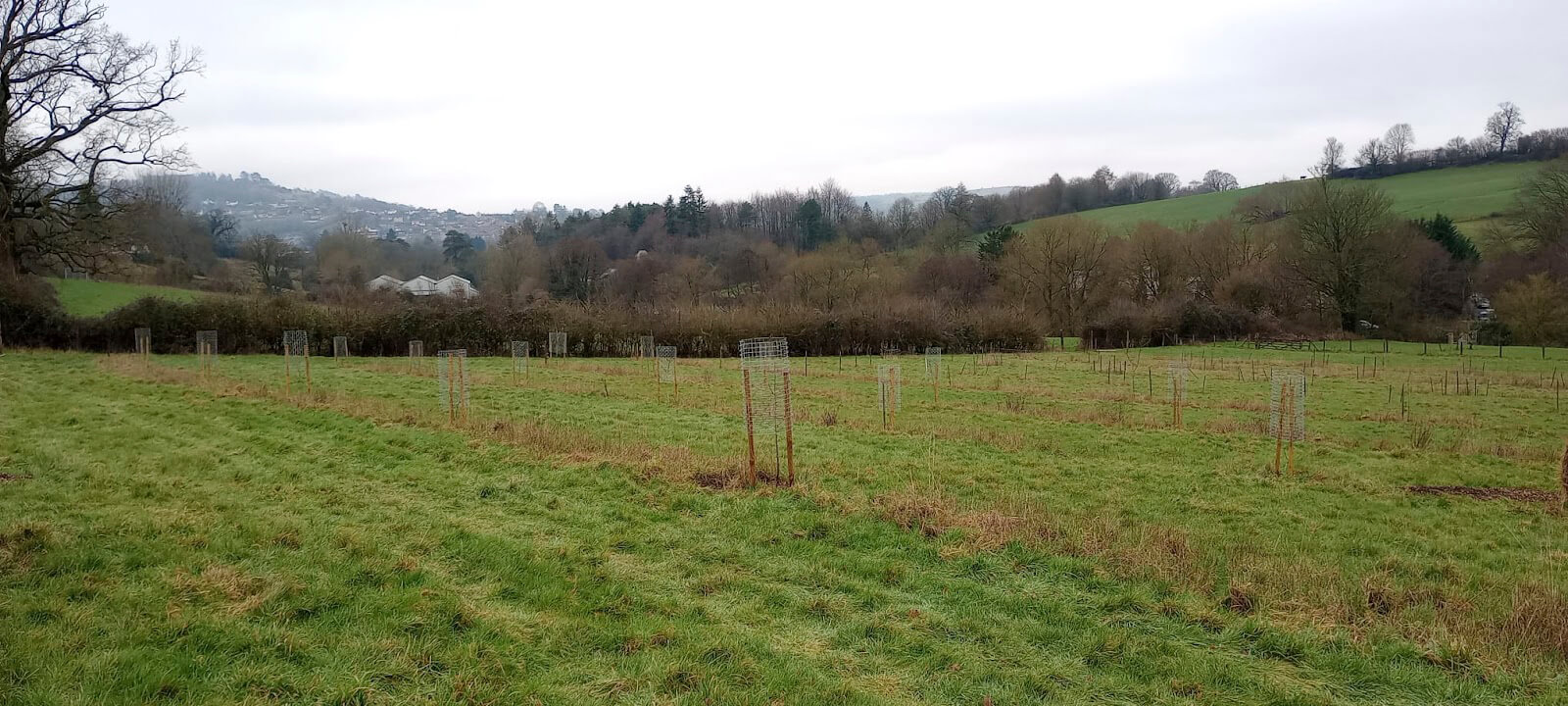
Our on-farm DIY hero, Andy, has been wading his way through a long list of maintenance and repair jobs that most of us would find a bit overwhelming. Andy, by contrast, has made light work of it; building, painting, sealing and repairing all over the farm, in all the different enterprises from the farmhouse, to the market garden. One of the biggest ongoing jobs on Andy’s list has been to finish getting cactus guards onto the fruit trees in our agroforestry fields. These fields are soon due to be grazed by our out-wintering cows, who get bales of hay rolled out for them in-field so that they can live out on pasture all year round. By cactus guarding the individual trees, we can protect the young and delicate trees from the playful cows, whilst maximising the amount of grass available for grazing.
Building project
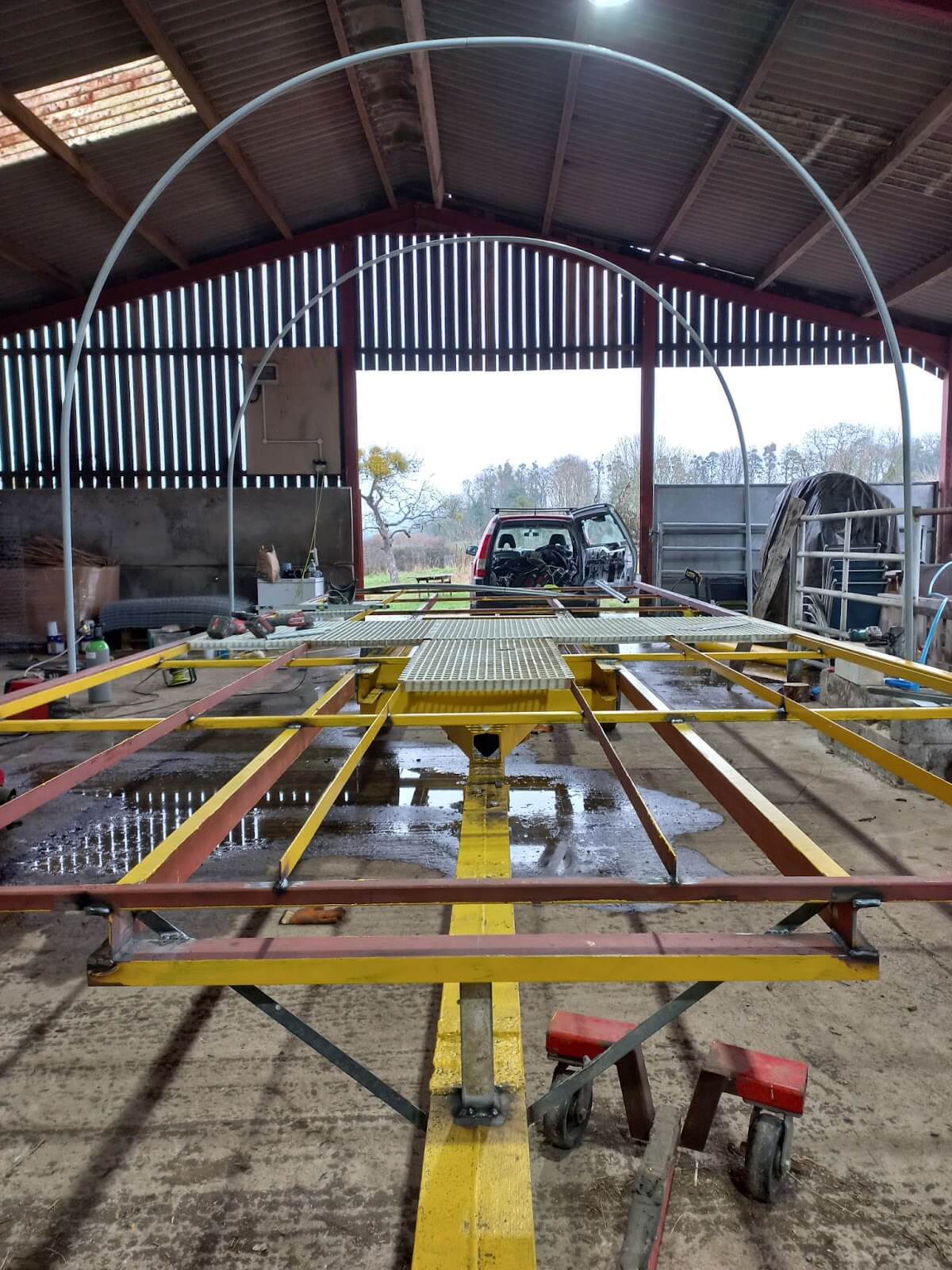
Elsewhere on the farm Matt, and friend of the farm Tom, have been making great progress building our third and final mobile hen house. Built on an old flat bed hay trailer and re-painted a very fetching yellow, the hen house is bigger, better and definitely brighter than its predecessors. It’s due to house 180 new hens in the spring, giving them shelter at night whilst they spend their days roaming the fields. This will significantly increase our egg production, so do spread the word on our pasture-raised, organic hens, as eggs of this quality are few and far between.
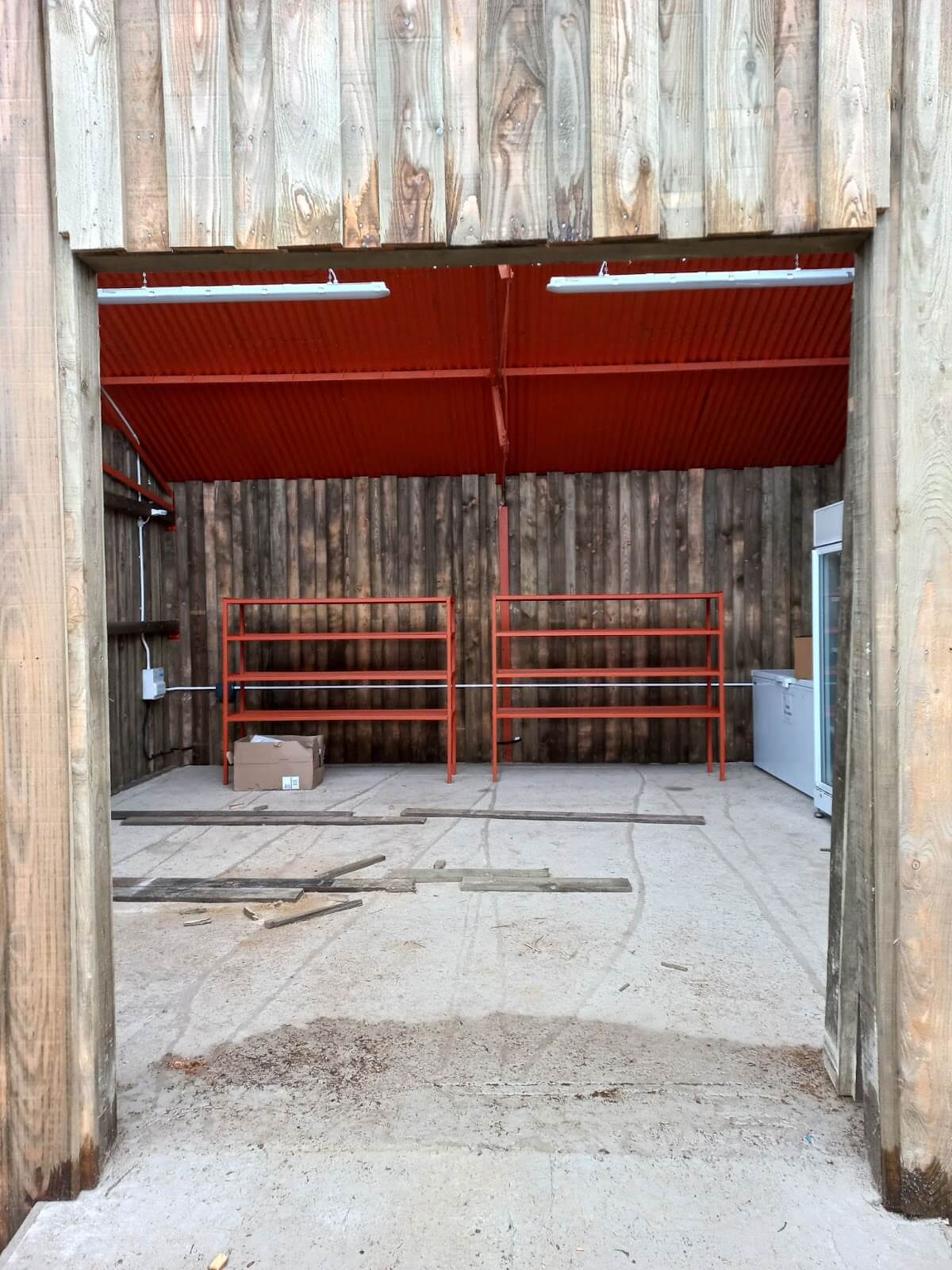
Hugh has been steadily chipping away at our new farm shop, finishing up two new shelving units from which you will soon be able to collect your food boxes. We’re just about to put the doors on the shop, and then the final stage, connecting the shop to the existing barn roof, will be under way. As well as food box collections, we’ll also have a full range of meat, eggs and other tasty bits for you to buy there and then in-store.
Our seasonal farm tours will soon be announced, so watch this space and we’ll look forward to seeing you on the farm soon.
Best,
Tom
Header image credit: Adam Lewis
