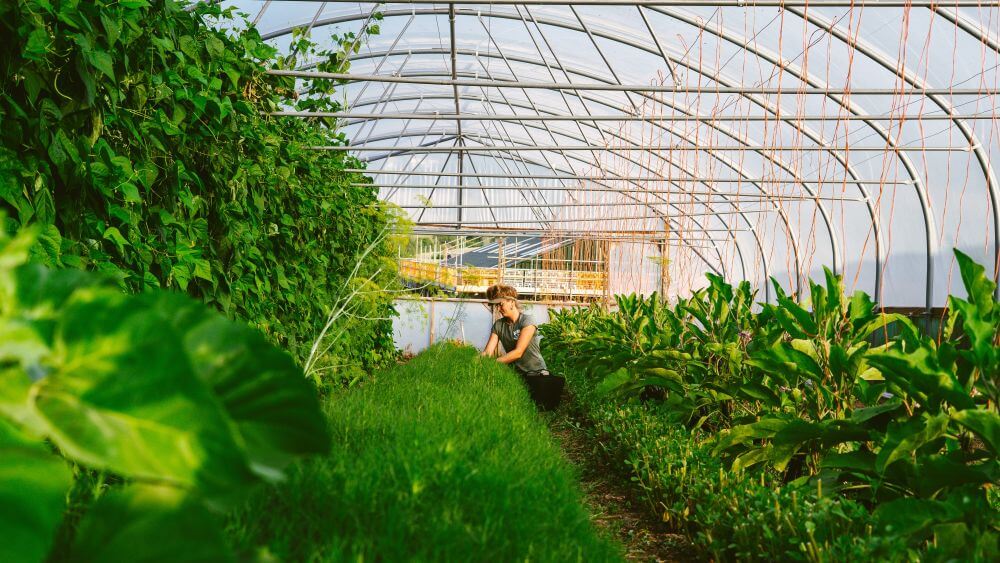
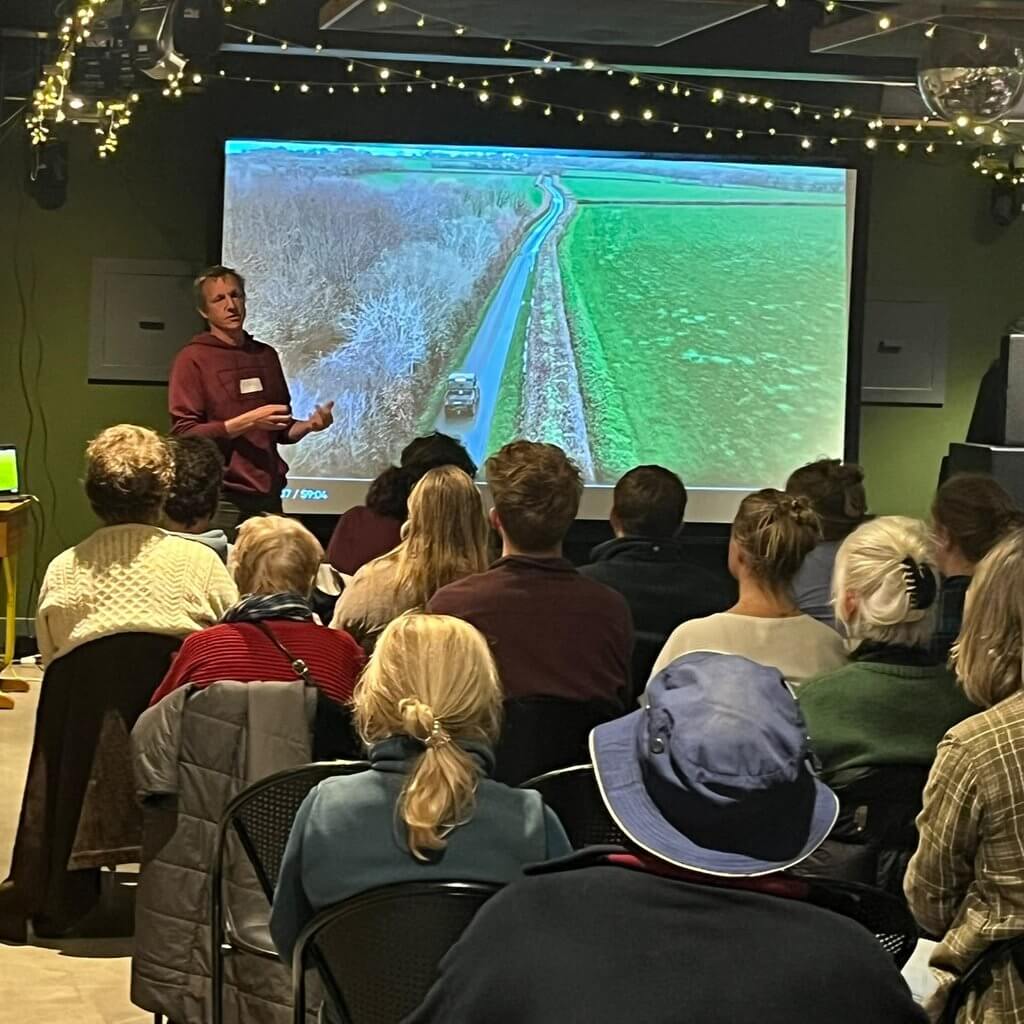
We launched the Stroud Farm Cluster at the end of October. This has been something we have been wanting to do for quite a few years and I am sure others have thought about it before I started farming. It took a brief meeting with Rebecca Charley to coincide with me speaking to the team behind Derek vs Derek and a general enthusiasm for Stroud Brewery to realise the ideal combination: pizza, a pint, a film and a chat. Supported by fantastic facilitators, generous support from Stroud District Council and lots of word of mouth publicity, we managed to get around 50 people in the room. Unlike most ‘farmer’ meetings, this one was actually almost entirely made up of farmers.
But what is the point? The specific answer to that question is yet to be determined as it is driven by the needs of the group, but several clear themes came out of our initial meeting.
Emerging themes
Water: this encompasses floodwater management, irrigation, dealing with droughts and rainwater harvesting. There is a keen awareness that this is important, potentially costly and often requires expertise that most farmers don’t possess.
Trees and hedges: there is plenty of hype around agroforestry in certain farming communities but it was clear that trees can mean many different things depending on what and how you farm. Again, expertise as to how to ‘do’ trees best is often not readily available.
Farming methods: there is lots of hype around certain farming methods (direct drilling, mob grazing etc) but not necessarily access to practical examples.
Sales and diversification: how do we sell more locally, or more directly and how too we develop the brand, set up the online shop and run markets. If you have only ever sold wholesale or at market then moving to a direct to consumer model might be quite daunting.
Grants: the government spends billions on supporting farmers, a highly sensitive topic in which DEFRA never comes out favourably. But half of the challenge, from the farmer’s perspective, is knowing what is available and how to apply. It truly is a minefield of forms and compliance that most farmers don’t have the time for.
Even though these are disparate themes, it is easy to draw the threads together: learning. And what might buck the stereotype of farmers is that this was a room of people keen to learn, to improve and to try new things. It was of course self-selecting and perhaps all the grumpy, stubborn, die-in-their-boots farmers were at home grumbling but this wasn’t a room exclusively full of right-on certified organic farmers. It was a relatively broad church.
So the output is going to include farm visits, setting up a WhatsApp group (yes, sadly, another fairy has to die) and bringing in experts to explain particularly complex issues. This may sound a bit underwhelming as an outcome from such a successful event but we reckon that small, tentative steps are best. There is great precedent of what can be achieved, such as by the North East Cotswold Farm Cluster which started out as a few farmers chatting in a pub and now involves over 200 farmers collectively managing more than 60,000 hectares and involved in large scale landscape recovery projects.
What we hope to achieve
Examples of what we hope to achieve in the first year include visits to farms that are doing things a bit differently: helping to explain how agroforestry might be integrated on an arable farm; learning about conservation grazing; better understanding whether a farm shop or vending machine might work at the farm gate. Experts might deliver practical workshops of soil monitoring, grant applications, the latest farm apps or how to sell directly.
The WhatsApp group is hopefully where a quick question gets quick, useful practical responses. As a member of various chicken/cow/agroforestry/pig WhatsApp groups, I am always amazed at the generosity of very experienced people with their knowledge and time.
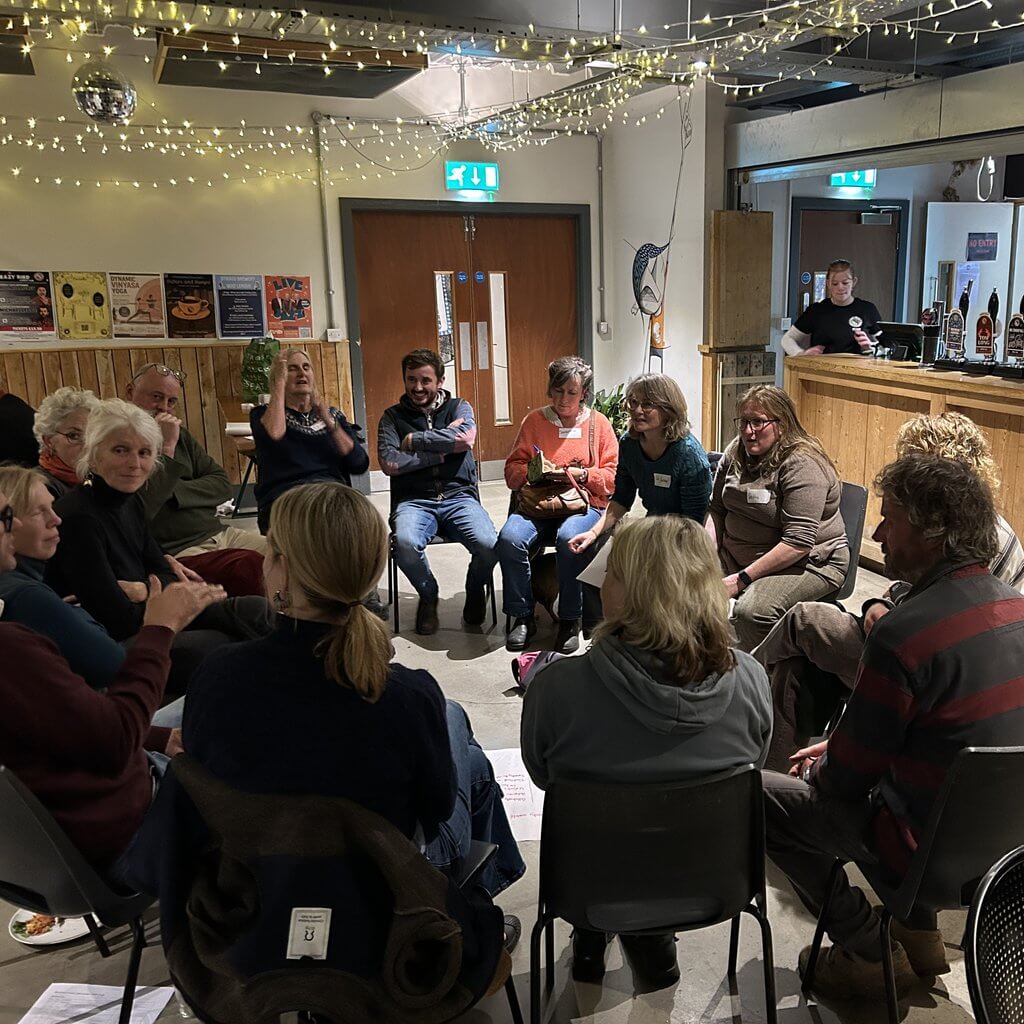
If these were the only outputs, we would be content. But I know that the more intangible and more important outputs from any getting together are the sense of community, shared struggle and connection that it nurtures. I know that, even if I wasn’t a farmer, I would really like to know my farmer neighbours, be able to offer a helping hand, and perhaps get some support if the supermarket shelves are going to become increasingly barren.
If you are a farmer, landowner, land worker or forester, please feel free to sign up here.
And if you know of a farmer, landowner, land worker or forester for whom this might be of interest, please share this page!
Eric Walters
